



Short Answer
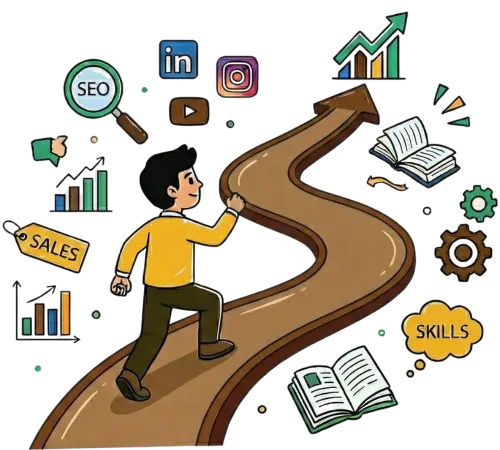
The top trending career options right now include Digital Marketing Specialist, AI-Led Sales and Marketing Specialist, AI and Machine Learning Specialist, Data Scientist, Cybersecurity Specialist, Software Developer, FinTech Professional, Renewable Energy Engineer, Business Intelligence and Data Analytics Professional, and UI/UX and Product Designer. These roles are driven by India’s growing AI job market (2.9 lakh postings in 2025, projected to grow 32% in 2026), expanding digital advertising industry, and a creator economy that has quadrupled to 4.12 million creators. The core skills employers value most include analytical thinking, digital and AI literacy, communication, adaptability, and practical experience through internships and projects.
Choosing the right career path early can shape not just your first job but the trajectory of your entire professional life. Yet for many students, this decision comes with confusion, pressure, and a lack of clarity about what options actually exist. The career landscape in 2026 looks very different from what it did even five years ago. Technology, digital transformation, and evolving industry needs have created multiple career paths beyond the traditional routes of engineering, medicine, or civil services. Whether you are exploring which career is best for the future, returning after a career gap in resume, or looking for trending career options in India, the opportunities are wider than ever. This article covers the top trending career options, the skills required to build a career, how to choose the right path, and practical ways to bridge the gap between education and industry expectations.
Top 10 Trending Career Options
Below are the top ten most emerging career options that can help you choose a career path aligned with your interests, skills, and future opportunities.
| Career Option | What the Role Is | Stream / Course | Who is it Suitable For? |
| 1. Digital Marketing Specialist | A Digital Marketing Specialist helps brands build visibility, attract customers, and drive business growth across digital channels. The role combines marketing strategy, consumer understanding, SEO and search optimisation, Google and Meta advertising, content and social media, e-commerce, analytics, and performance measurement. With AI becoming part of modern marketing workflows, digital marketers are also increasingly expected to use AI tools to research, create, analyse, optimise, and execute campaigns more efficiently. | After Class 10: Students can choose Commerce, Science, or Humanities based on their interests. After Class 12: A degree in BBA, B.Com., Mass Communication, Marketing, or a related field can provide a useful foundation, although a specific degree is not mandatory. Students can then pursue a digital marketing career through a professional institute like Kraftshala School of Business, covering SEO, social media, Google Ads, content writing, email marketing, and analytics. Building a portfolio through blogs, social media campaigns, or live projects is highly valuable. Learn more about Marketing Launchpad. | It is one of the most trending career options for students and professionals who enjoy creativity, communication, social media, writing, branding, and understanding consumer behaviour. It is also suitable for those looking for a flexible career where creative thinking and analytical skills work together. |
| 2. AI-Led Sales & Marketing Specialist | AI-Led Sales and Marketing professionals combine marketing strategy, customer insights, digital channels, and AI-powered tools to make marketing and sales more effective. They use AI for tasks like understanding consumer behaviour, identifying opportunities, developing and personalising content, improving customer engagement, generating and nurturing leads, and supporting growth decisions. This role brings together marketing, sales, technology, data, and creativity, making it increasingly relevant as businesses move towards AI-first digital and growth strategies. | After Class 10: Students can opt for Commerce, Science, or Humanities depending on their interests. After Class 12: Courses such as BBA, B.Com., Marketing, Business Analytics, Computer Applications, or related programmes can provide a strong foundation. After this, students need to learn about AI-powered marketing tools, CRM platforms, marketing automation, analytics, prompt engineering, and customer-data analysis through a specialised course like Kraftshala’s PGP in AI-Led Marketing. | This is suitable for people interested in business, technology, communication, persuasion, and consumer psychology. It is especially relevant for learners who want to understand how AI is changing traditional sales and marketing functions. |
| 3. AI & Machine Learning Specialist | AI and Machine Learning Specialists build and apply intelligent systems that can learn from data, identify patterns, make predictions, automate tasks, and support complex decision-making. Their work can include generative AI, natural language processing, predictive analytics, recommendation systems, computer vision, and AI automation. As businesses increasingly integrate AI into products and everyday operations, professionals in this field are moving beyond model development to solving real-world business and customer problems. | After Class 10: Choosing Science with Mathematics and Computer Science can provide a strong foundation. After Class 12: Students can pursue B.Tech./B.E. in Computer Science, Artificial Intelligence, Machine Learning, Data Science, or a related discipline. Students also need to develop practical skills in Python, statistics, machine learning, deep learning, and generative AI through projects and specialised training. | A trending career option for students who enjoy mathematics, programming, logical reasoning, and solving complex problems. It is particularly suitable for those who want to work on technologies that are transforming industries and the future of work. |
| 4. Data Scientist / Big Data Specialist | Data Scientists and Big Data Specialists help organisations turn large volumes of structured and unstructured data into meaningful insights. They combine statistics, programming, data analysis, machine learning, and visualisation to identify patterns, predict outcomes, understand customers, and support strategic decisions. The role is becoming increasingly important as companies generate more data and need professionals who can translate that information into measurable business value. | After Class 10: Students interested in this field should ideally choose Science with Mathematics. After Class 12: Students can pursue degrees such as B.Tech./B.E. in Computer Science or Data Science, B.Sc. in Statistics, Mathematics, or Data Science, or another quantitative discipline. Learning Python, SQL, statistics, data visualisation, and machine learning through practical projects can strengthen employability. | Most suitable for analytical and curious students who enjoy numbers, patterns, research, and problem-solving. It is a strong option for those who want to turn raw information into meaningful business or scientific insights. |
| 5. Cybersecurity Specialist | Cybersecurity Specialists protect an organisation’s digital infrastructure, applications, networks, and sensitive information from increasingly sophisticated cyber threats. Their work can involve threat monitoring, vulnerability assessment, security testing, incident response, identity management, cloud security, and risk prevention. With businesses becoming more dependent on connected and cloud-based systems, cybersecurity professionals play a critical role in keeping digital operations secure and resilient. | After Class 10: Students can choose Science with Computer Science if available. After Class 12: Students can pursue B.Tech./B.E. in Computer Science, Cybersecurity, or Information Technology, a relevant B.Sc./BCA programme, and other bca career options. Later, they can strengthen their profile with cybersecurity certifications, ethical-hacking labs, cloud-security training, and hands-on security projects. | This career is suitable for those who enjoy technology, investigation, logical thinking, and solving challenging problems. It can be particularly attractive to students and professionals interested in protecting digital systems and working in a field where demand is closely linked to increasing digital risks. |
| 6. Software & Application Developer | Software and Application Developers design, build, test, and improve the digital products and platforms that people and businesses use every day. Depending on their specialisation, they may work on web and mobile applications, cloud platforms, enterprise software, APIs, AI-enabled products, or automation solutions. The role is evolving alongside AI and cloud technologies, making adaptability and the ability to work with modern development tools increasingly important. | After Class 10: Students interested in programming can choose Science with Mathematics and Computer Science. After Class 12: Common degrees include B.Tech./B.E. in Computer Science or IT, BCA, or other computer-related programmes. Students should build practical expertise in programming languages, databases, APIs, software development, cloud platforms, and version control by creating real-world projects. | This is a suitable role for students who enjoy coding, technology, logical reasoning, and building digital products. It is also a good choice for learners who enjoy continuous problem-solving and are willing to keep updating their technical skills as technology changes. |
| 7. FinTech Professional | FinTech professionals work at the intersection of finance, technology, and data to create or improve digital financial products and services. They can contribute to areas such as digital payments, online banking, lending platforms, investment technology, financial analytics, fraud detection, risk management, and automated financial services. As financial institutions and technology companies continue to digitise how people save, borrow, invest, and transact, FinTech is creating opportunities for professionals with both business and technology expertise. | After Class 10: Students can choose Commerce with Mathematics, although Science and Computer Science can also be useful for technology-oriented FinTech roles. After Class 12: Students can pursue B.Com., BBA, Economics, Finance, Computer Science, Data Science, or related programmes. Later, it is better to specialise in FinTech, financial analytics, programming, digital payments, or financial technology through certifications and practical projects. | It is suitable for students who are interested in both finance and technology. It is particularly relevant for those who want to understand how digital platforms, automation, data, and emerging technologies are transforming financial services. |
| 8. Renewable Energy Engineer | Renewable Energy Engineers use engineering and technical expertise to design, develop, test, and improve systems that generate and manage energy from sustainable sources such as solar and wind. Their work can extend to energy storage, grid integration, energy efficiency, project development, and improving the performance of renewable-energy systems. The role is gaining importance as businesses and governments invest in cleaner energy infrastructure and work towards reducing carbon emissions. | After Class 10: Students should ideally choose Science with Physics, Chemistry, and Mathematics. After Class 12: Students can pursue B.Tech./B.E. in Electrical, Mechanical, Renewable Energy, Energy Engineering, or a related discipline. Furthermore, students can specialise through courses in solar technology, energy storage, smart grids, energy management, or sustainable engineering. | The role is suitable for students who enjoy engineering, science, sustainability, and solving large-scale environmental challenges. It is a promising path for those who want to combine technical expertise with the growing transition towards cleaner energy. |
| 9. Business Intelligence & Data Analytics Professional | Business Intelligence and Data Analytics professionals help organisations make better decisions by turning business data into dashboards, reports, performance insights, forecasts, and actionable recommendations. They analyse areas such as sales, marketing, finance, customer behaviour, and operations to identify what is working, where problems exist, and where growth opportunities may lie. Unlike highly technical data-science roles, this career often sits closer to business decision-making, making the ability to combine analytical thinking with commercial understanding especially valuable. | After Class 10: Students can choose Commerce with Mathematics, Science, or another stream with a strong quantitative component. After Class 12: Students can go for degrees like B.Com., BBA, Economics, Statistics, Data Analytics, Computer Science, or a related programme. Developing practical skills in Excel, SQL, Power BI, Tableau, data visualisation, and business analytics can help students become job-ready. | It is suitable for students who enjoy numbers and analysis and also want to understand how businesses operate. It is a good fit for those who like finding patterns in information and turning data into practical recommendations. |
| 10. UI/UX & Product Designer | UI/UX and Product Designers focus on creating digital products that are useful, intuitive, accessible, and enjoyable to use. They research user needs, understand customer behaviour, map user journeys, create wireframes and prototypes, design interfaces, and test experiences before products are launched or improved. As businesses compete increasingly through digital experiences, these professionals help bridge the gap between user expectations, business goals, and technology. | After Class 10: Students can choose any stream, as creativity, communication, and problem-solving are more important than a particular school stream. After Class 12: Students may pursue Design, UX/UI, Interaction Design, Visual Communication, or related programmes, or develop their skills through specialised UX courses. Learning tools such as Figma along with user research, wireframing, prototyping, and usability testing is essential. | This is a trending career option for creative, observant, and empathetic problem-solvers who enjoy understanding how people interact with technology. It is particularly suitable for students who want to work in the digital economy without making programming the central part of their career. |
Trending Career Opportunities Across Emerging Industries
The job market is moving beyond traditional career paths as technology, digitalisation, global business, and changing consumer needs create demand for new skills. From robotics and cloud computing to healthcare, semiconductors, and the creator economy, several emerging fields are opening up promising career opportunities.
1. Digital Marketing & Growth
According to Grand View Research, India’s digital advertising market generated revenue of approximately USD 13.6 billion in 2024 and is projected to reach USD 32.3 billion by 2030, growing at a CAGR of 15.3% (source). This is creating opportunities across SEO, performance marketing, content, social media, e-commerce, and AI-led marketing. Roles such as Digital Marketing Specialist and Growth Marketer increasingly reward practical skills, campaign experience, and measurable results alongside formal education.
2. Data, AI & Analytics Careers
According to a Bain & Company report, India could have 2.3 million AI-related jobs by 2027, creating opportunities across AI engineering, data science, machine learning, analytics, and other AI-enabled functions. The important shift is that AI is creating new categories of work rather than only replacing existing ones, making skills such as data analysis, AI tools, machine learning, and problem-solving increasingly valuable. For aspiring professionals, this means a relevant degree can help, but hands-on skills and the ability to work with AI can be equally important as organisations move from experimentation to real-world AI adoption.
3. Creative Economy Careers
India’s creator base grew from 0.96 million in 2020 to 4.12 million in 2025, with non-metro creators making up 66% of the ecosystem, according to an ISB-Hashfame report. This is opening careers in content creation, video, design, creator marketing, copywriting, and social commerce. In this space, portfolios, storytelling, audience-building, and platform expertise can often demonstrate capability more directly than a specific degree.
4. Entrepreneurship & Digital Business
As per Boston Consulting Group, India’s creator economy already influences more than USD 350 billion in annual consumer spending and is projected to influence over USD 1 trillion by 2030. This reflects a broader opportunity to build D2C brands, online services, creator-led businesses, SaaS products, and niche digital ventures. Entrepreneurship places the strongest emphasis on skills — including customer understanding, sales, marketing, financial management, technology, and execution — rather than academic credentials. Students exploring unconventional paths may also find relevant direction among career options after UPSC failure or high paying jobs after BA.
8 Core Skills Required to Build a Career in Today’s AI-Led Era
Building a successful career in today’s AI-led era requires a balance of hard skills and soft skills. Technical and digital capabilities help you work with modern tools, while analytical thinking, communication, adaptability, and creativity help you apply those skills effectively in real-world situations.
1. Digital & AI Literacy
You do not need to become an AI engineer to benefit from AI. Understanding AI tools, automation, digital platforms, data, and emerging technologies can help you work more efficiently and stay relevant as technology changes. According to the World Economic Forum’s Future of Jobs Report 2025, AI and big data, networks and cybersecurity, and technological literacy are among the fastest-growing skill areas through 2030.
2. Analytical Thinking
Analytical thinking helps you break down problems, interpret information, identify patterns, and make better decisions. It is particularly valuable in data, marketing, finance, technology, and business roles and remains the top core skill identified by employers, as per the World Economic Forum.
3. Data & Analytical Skills
Being comfortable with Excel, SQL, dashboards, data visualisation, statistics, or basic data analysis can add value across almost any industry. You do not necessarily need advanced programming; the ability to understand data and turn it into useful business insights is increasingly important in an AI-led workplace.
4. Problem-Solving & Critical Thinking
AI can generate information and automate tasks, but professionals still need to determine what problem needs solving, whether an output is reliable, and what action should follow. Developing structured thinking, judgement, and the ability to evaluate different solutions can make your expertise more valuable rather than simply replacing it with AI tools.
5. Communication & Collaboration
Technical expertise becomes more useful when you can explain your ideas clearly and work effectively with others. Writing, presenting, active listening, teamwork, and stakeholder communication are important across both technical and non-technical careers, with leadership and social influence also ranking among employers’ core skills.
6. Creativity & Adaptability
Creativity is increasingly about finding better ways to solve problems, develop ideas, and use technology — not just producing artistic work. At the same time, adaptability helps you respond as tools and job requirements change. The WEF ranks creative thinking and resilience, flexibility, and agility among the skills expected to keep gaining importance.
7. Continuous Learning
In an AI-led job market, learning cannot stop with a degree or first job. Short courses, certifications, workshops, industry resources, and regular experimentation with new tools can help you keep pace with changing requirements. The WEF identifies curiosity and lifelong learning among the skills expected to rise in importance through 2030.
8. Practical Experience Through Internships & Projects
Skills become far more credible when you can demonstrate how you have applied them. Internships, live projects, freelance assignments, case studies, and hands-on learning can help you build a portfolio and understand how work happens outside the classroom. Even for AI-related careers, practical exposure is increasingly valuable as employers look for people who can apply technology to real business problems.
A strong career profile is rarely built through courses alone. Pick a skill, learn the fundamentals, apply it through a project, gain workplace exposure through an internship, and document what you achieved. This combination of knowledge, practical experience, and continuous upskilling can help turn your learning into demonstrable career readiness.
How to Choose the Right Career Path
Choosing a career path is less about picking the “perfect” job and more about finding a direction that fits your interests, strengths, lifestyle, and long-term goals. A little research and real-world testing can make the decision much clearer. Even if you are exploring a job after career gap, the same principles apply.
1. Identify Your Interests
Start by thinking about the subjects, activities, and problems you naturally enjoy exploring. Pay attention to the work you can stay curious about even when it becomes challenging, because genuine interest can make long-term growth much easier.
2. Evaluate Your Strengths
Take an honest look at the skills you already have — from communication and creativity to analytical thinking, leadership, or technical ability. Also consider where you consistently perform well and which skills you would enjoy developing further.
3. Research Your Potential Careers
Once you have a few options in mind, research the roles, qualifications, earning potential, work environments, and future demand associated with each one. Look beyond job titles and explore what people actually do in those careers on a day-to-day basis.
4. Test Your Options Through Internships or Courses
Before committing to a career, get some hands-on exposure through internships, freelance projects, volunteering, workshops, or short courses. Real experience can quickly show you whether a career genuinely suits you or simply sounds appealing on paper.
Build Skills for Future Careers
A degree builds foundational knowledge, but employers increasingly look for job-ready skills and proof of application. The gap between education and industry can be narrowed through practical learning, projects, mentorship, and real-world exposure.
| Traditional Education | What Industry Increasingly Expects |
| Focuses largely on concepts, theory, and examinations. | Looks for people who can apply concepts to real business problems. |
| A degree demonstrates formal education in a subject. | Practical skills demonstrate whether someone can actually perform the work. |
| Learning is often structured around a fixed curriculum. | Job requirements evolve as technology, tools, and consumer behaviour change. |
| Assignments are usually designed for academic evaluation. | Projects, portfolios, internships, and work samples provide evidence of capability. |
| Students may learn tools individually. | Employers increasingly value the ability to combine digital, analytical, communication, and problem-solving skills. |
Traditional education continues to provide an important foundation, but learning cannot stop at the classroom or degree. As industries evolve, students need opportunities to apply their knowledge, work with current tools, and understand real business challenges. The strongest career preparation comes from combining education with practical experience and continuous upskilling.
This article covered the top 10 trending career options — from digital marketing and AI to cybersecurity, data science, and UI/UX design — along with emerging opportunities in the creative economy, entrepreneurship, and FinTech. It outlined the eight core skills employers value most in today’s AI-led era, including analytical thinking, communication, adaptability, and practical experience through internships and projects. It also provided a step-by-step approach to choosing the right career path by identifying interests, evaluating strengths, researching roles, and testing options through real-world exposure. Across every section, the consistent theme is that skills, practical application, and continuous learning matter as much as — if not more than — formal qualifications alone.
For learners exploring digital marketing as a career path, Kraftshala’s Marketing Launchpad offers a practical, career-focused programme that combines 920+ hours of hands-on learning, real-brand projects through its Real Play methodology, AI-led training, and mentorship from industry practitioners. With 3,300+ placements across programmes, 800+ recruiting partners including brands like Nestle, Hindustan Unilever, Amazon, Flipkart, and Nykaa, and a reported 94–96% placement rate, the programme is designed to make learners job-ready. Kraftshala’s offline campus in Gurugram operates with 30 students per batch, and the programme includes a fee refund guarantee tied to placement outcomes — providing a measurable, low-risk path from learning to career.
Frequently Asked Questions
What are the fastest-growing career options right now?
Some of the fastest-growing career options in 2026 include Artificial Intelligence and Machine Learning (AI engineers, ML engineers, and AI specialists), Data Science and Analytics (data scientists, data analysts, and business intelligence professionals), Cybersecurity (cybersecurity analysts, ethical hackers, and security engineers), Cloud Computing and DevOps (cloud engineers, DevOps engineers, and cloud architects), and Digital Marketing and Content Technology (SEO, performance marketing, content strategy, and AI-assisted marketing roles).
What careers will be in high demand in the next 5 years?
Careers expected to be in high demand over the next five years include AI and Machine Learning (AI engineers, AI product specialists, and automation experts), Healthcare and Biotechnology (healthcare professionals, biotech researchers, and health-tech specialists), Cybersecurity (driven by growing digital dependence and increasingly sophisticated cyber threats), Renewable Energy and Sustainability (solar, wind, electric mobility, energy storage, and sustainability roles), and Data and Cloud Technology (data engineers, cloud specialists, and technology professionals managing digital infrastructure).
Which non-traditional career paths are trending in 2025 and beyond?
Non-traditional career paths gaining momentum include AI Content and Prompt Specialists (who combine domain knowledge with AI tools to create and optimise content), Creator Economy Careers (content creators, UGC creators, influencers, and creator managers), No-Code/Low-Code Development (building websites, applications, and automated workflows without traditional software development), AI Automation Consultants (helping businesses implement AI-powered workflows), and Sustainability and Climate Careers (carbon consultants, sustainability specialists, ESG professionals, and environmental analysts).
What skills are needed for emerging careers like AI or data science?
Emerging AI and data science careers commonly require a combination of technical skills (Python, SQL, statistics, machine learning, data visualisation, and familiarity with AI frameworks), data literacy (collecting, cleaning, analysing, interpreting, and communicating data), AI and automation skills (understanding generative AI, prompt engineering, automation tools, and responsible AI practices), problem-solving skills (translating complex technical problems into practical solutions), and communication and adaptability (strong collaboration, critical thinking, and continuous learning as technologies evolve rapidly).
What are the top skills required for future career options?
The top skills for future careers include AI literacy (using AI tools, evaluating AI outputs, and integrating AI into workflows), data and analytical thinking (data interpretation, research, critical thinking, and evidence-based decision-making), digital and technical skills (automation, cloud technology, cybersecurity, and digital platforms), communication and collaboration (writing, presentation, teamwork, and interpersonal skills), and adaptability and continuous learning (the ability to learn new tools, reskill, and adjust to changing technologies for long-term career growth).



Nishtha Jain 

Head of Marketing, Kraftshala
Nishtha Jain is the Head of Marketing at Kraftshala, largest marketing jobs providing edtech platform in India. ... read more